
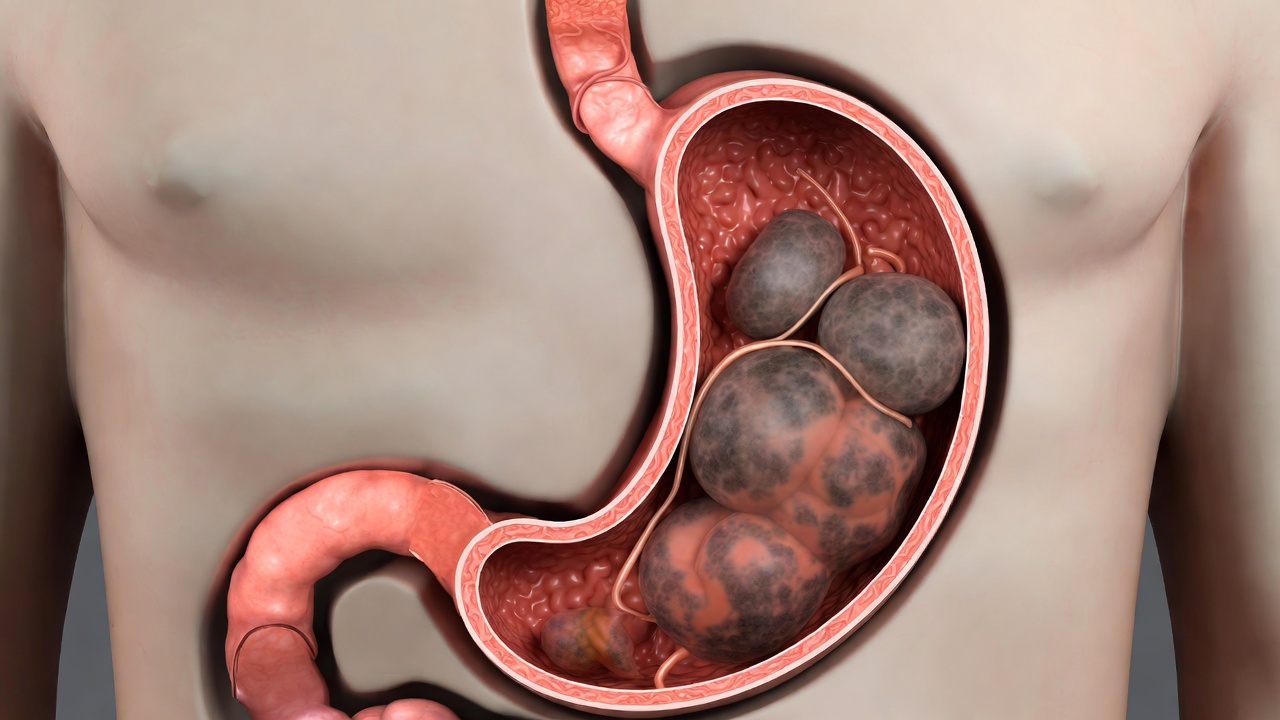
Stomach cancer, medically called gastric cancer, is a disease where abnormal cells grow uncontrollably in the lining of the stomach. Over time, these cells form a tumour that can invade deeper stomach layers and spread to other organs such as the liver, lungs, or lymph nodes.
The stomach helps digest food by mixing it with acids and enzymes. Stomach cancer usually starts in the inner lining (mucosa) of the stomach and can grow deeper into the walls over time.
Types of Stomach Cancer
1. Adenocarcinoma (Most Common – Over 90%)
Starts in the stomach lining. This is the type most people are diagnosed with.
2. Lymphoma
Develops from the immune tissue in the stomach. Less common.
3. Gastrointestinal Stromal Tumours (GIST)
Starts in nerve or muscle cells of the stomach wall. Rare but treatable.
4. Neuroendocrine Tumours
Slow-growing tumors from hormone-producing cells. Uncommon.
Who Do Stomach Cancer Affect?
1. More common in men than in women
2. Most cases occur at age 40
3. Often diagnosed at Stage 3 or 4
What Causes Stomach Cancer?
H. pylori Infection: This bacterium infects the stomach lining, causing ulcers and inflammation that can lead to cancer over the years. It’s very common; up to 70% of Africans carry it, spread through contaminated water, food, or close contact in crowded homes. Poor sanitation in informal settlements makes it worse.
Diet: Too much salted meats, processed sausages, Smoked foods, and preserved foods with chemicals. Reusing cooking oil or eating kerosene-laced meals (common in some areas) adds toxins.
Smoking and Alcohol: Tobacco and illicit brews double the risk. Smoking damages the stomach lining, while excess alcohol irritates it.
Family History and Genetics: If a close relative had it, your risk is higher. Some genetic conditions, like pernicious anemia, play a role.
Other Factors: Obesity, previous stomach surgery, or long-term acid reflux. Aflatoxin from moldy maize (a staple food) and agrochemicals on farms may contribute.
Obesity
Frequent exposure to substances like coal, metal, and rubber.
Men are twice as likely to get it as women, and it’s more common after age 50, but younger (30-40s) individuals are increasingly affected due to lifestyle changes.
Symptoms: What to Watch For
Early stomach cancer often has no symptoms, which is why it’s called a “silent killer.” As it grows, signs may include:
- Feeling full after small meals (early satiety).
- Persistent stomach pain or discomfort above the navel.
- Unexplained weight loss.
- Nausea, vomiting (sometimes with blood).
- Difficulty swallowing.
- Fatigue or weakness from anemia (low blood).
- Black, tarry stools (from internal bleeding).
- Heartburn or indigestion that doesn’t go away.
These can mimic common issues like ulcers or malaria, so many people delay seeking help. If you have these for more than two weeks, see a doctor, especially if you have H. pylori or family cancer.
Stages of Stomach Cancer
Stage 0–1 (Early)
- Cancer is superficial
- High cure rate
- Surgery may be enough
Stage 2
- Cancer deeper but localized
- Surgery + chemotherapy
Stage 3
- Spread to lymph nodes
- Aggressive treatment required
Stage 4 (Advanced)
The focus is on life extension and symptom control
Spread to other organs
How It Is Detected
1. Endoscopy (Most Important Test)
A camera is passed through the mouth to inspect the stomach.
Biopsy samples are taken.
2. Biopsy
Confirms cancer type.
3. CT Scan / MRI
She shows spread to other organs.
4. Blood Tests
Checks for anemia and organ function.
Treatment Options
Treatment depends on stage, health, and location. A team of doctors (oncologists, surgeons) plans it.
Palliative Care: For late stages, focuses on pain relief and quality of life.
Surgery: Removing part or all of the stomach (gastrectomy) for early stages. Lymph nodes are also removed.
Chemotherapy: Drugs to kill cancer cells, often before/after surgery.
Radiation Therapy: High-energy rays to target tumors, combined with chemo.
Targeted Therapy: Drugs like trastuzumab for specific cancer types.
Immunotherapy: Boosts your immune system to fight cancer, for advanced cases.
Palliative Care: For late stages, focuses on pain relief and quality of life.
Is Stomach Cancer Curable?
Stomach cancer can be treated effectively if diagnosed early. However, diagnosis often occurs in later stages when symptoms become apparent. Discuss with your healthcare provider the factors that influence your treatment outcomes.
How Can I Prevent Stomach Cancer?
You cannot prevent stomach cancer entirely, but you can reduce your risk by following these guidelines:
1. Treat H. pylori Infection: If you test positive for H. pylori, it is important to treat the infection, as it is a significant risk factor for developing stomach cancer.
2. Address Stomach Conditions Promptly: Make sure to treat ulcers, gastritis, and other stomach conditions promptly. Untreated issues, especially those caused by H. pylori bacteria, can increase your risk of stomach cancer.
3. Eat a Healthy Diet: A healthy diet that is high in fruits and vegetables and low in salt and red meats can help reduce your risk of stomach cancer. Focus on foods rich in vitamin C, beta-carotene, and carotenoids—such as citrus fruits, leafy green vegetables, and carrots—as these provide important nutrients.
4. Avoid Tobacco: Smoking and using tobacco products significantly increase your risk of stomach cancer, as well as many other types of cancer.
5. Maintain a Healthy Weight: A healthy weight can vary from person to person. Consult your healthcare provider to determine what a healthy weight means for you.
Dietary Tips
Eat More: Fresh fruits/veggies (kales, spinach, bananas, oranges), whole grains (millet, sorghum, whole maize), legumes (cowpeas, beans), and fermented milk ( in moderation).
Eat Less: Salted/smoked meats, processed foods, reused oils, moldy grains (check for aflatoxin).
Healthy Habits: Boil water to kill H. pylori, quit smoking/alcohol, maintain healthy weight.
Get tested for H. pylori—antibiotics can eradicate it.
A Note From Health-Link Natural Clinic
Stomach cancer isn’t always preventable, but it can be treatable if caught early. At Health-Link Natural Clinic, we may recommend surgery to remove cancer cells or tumors based on your diagnosis. We also suggest a combination of treatments that can kill or shrink the cancer cells. Ultimately, your prognosis depends on various factors, and we would be happy to discuss these with you. Don’t hesitate to reach out to us at 0721 500 900.
