
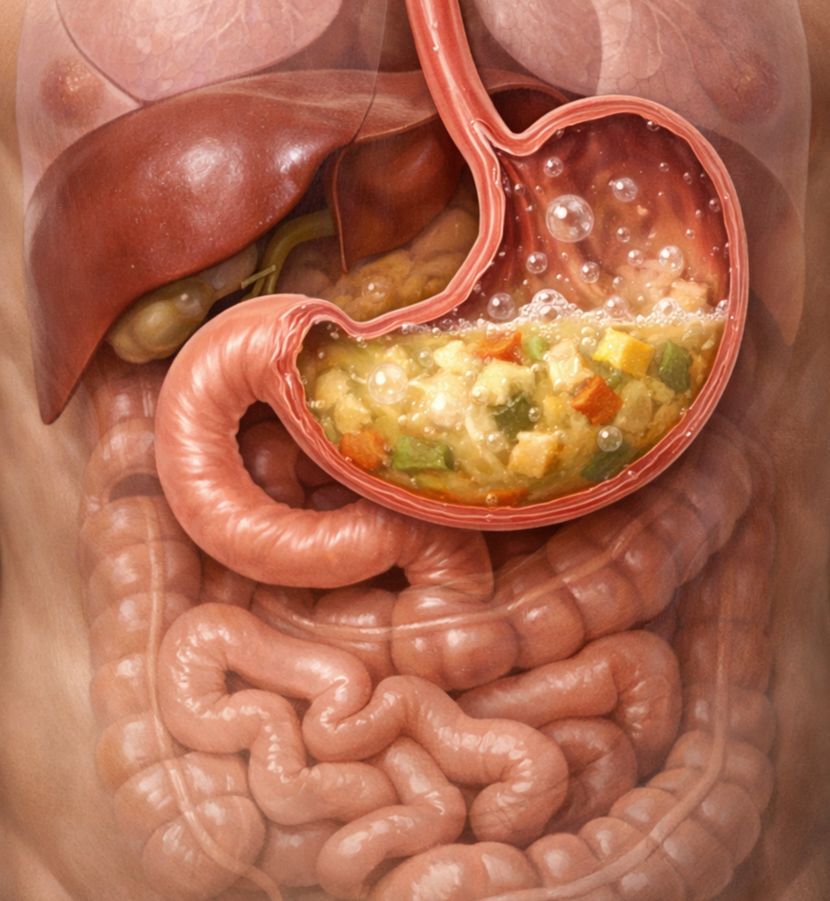
Gastroparesis: When the Stomach Fails to Do Its Job Properly
Many people believe that digestion occurs automatically: you eat food, your stomach processes it, and then the food is digested and absorbed. It's that simple.
However, for individuals with gastroparesis, digestion is not so straightforward. It can slow down or even stop completely, causing food to remain in the stomach much longer than normal. This delay can lead to ongoing discomfort and serious health issues if not addressed.
Gastroparesis literally means a “paralyzed stomach.” It is a condition in which the nerves and the muscles in the stomach don't move food as they should for it to be digested. The stomach muscles do not contract properly, delaying the emptying of food into the small intestine, even in the absence of a blockage. In simple terms, food enters the stomach but struggles to leave on time.
How the Stomach Normally Works (And What Goes Wrong in Gastroparesis)
1. Food Enters the Stomach
Normal: After swallowing, food enters the stomach, where digestion begins immediately.
What goes wrong: In gastroparesis, food enters normally, but problems start once it’s inside.
2: Stomach Muscles Contract and Mix Food
Normally, strong stomach muscles stir food and mix it with digestive acids, breaking it down into a semi-liquid form.
What goes wrong: These muscle contractions become weak or irregular, so food is not properly mixed or broken down
3: The Vagus Nerve Controls Movement
Normally, the vagus nerve sends signals telling stomach muscles when and how to contract.
What goes wrong: Damage or dysfunction of this nerve disrupts the signals, making the stomach slow or unresponsive.
4: Food Is Released Gradually Into the Intestines
Normally, the stomach releases food slowly and steadily into the small intestine for further digestion.
What goes wrong: Food stays in the stomach too long, causing bloating, nausea, and early fullness.
5: Digestion and Absorption Continue Smoothly
Normally, once food reaches the intestines, nutrients are absorbed efficiently.
What goes wrong: Delayed emptying interferes with digestion, leading to poor nutrition and unstable blood sugar levels.
What is The Main Cause of Gastroparesis?
Damage to the nerves that stimulate your stomach muscles is the main cause of gastroparesis. The issue may arise from damage to the muscles themselves. As a result, the muscle contractions that digest food in your stomach and push it out through the pylorus are hindered. This impairment leads to indigestion and delayed gastric emptying, meaning food remains in your stomach for too long.
What Are The Specific Causes of Gastroparesis?
Gastroparesis does not appear randomly. Common causes include:
1. Diabetes
Long-term diabetes can damage nerves, including the vagus nerve.
This is the leading cause of gastroparesis worldwide.
2. Previous Surgery
Abdominal or stomach surgery can accidentally damage stomach nerves.
3. Chronic Infections
Repeated stomach infections or untreated gut inflammation can interfere with normal digestion.
4. Certain Medications
Painkillers, antidepressants, and some blood pressure drugs can slow stomach emptying.
5. Idiopathic Gastroparesis
In some people, no clear cause is found, but symptoms are still very real.
Common Signs and Symptoms of Gastroparesis
Symptoms vary from person to person, but the most common include:
- Persistent bloating, even after small meals
- Nausea and vomiting, sometimes hours after eating
- Early fullness – you feel full after just a few bites
- Upper abdominal pain or discomfort
- Acid reflux that doesn’t improve with treatment
- Loss of appetite and weight loss
- Poor blood sugar control (especially in diabetics)
If ulcer treatment keeps failing, gastroparesis should be suspected.
Is Gastroparesis Painful?
Gastroparesis symptoms vary among individuals. Some experience persistent stomach pain that affects daily life, but this pain does not always correlate with the severity of the condition or the rate of stomach emptying. Increased pain may be due to heightened nerve sensitivity, which can be linked to the cause of their gastroparesis.
What does gastroparesis feel like?
When your stomach muscles are not functioning properly, food can remain in your stomach for an extended period after you eat. As a result, you may feel full almost immediately and for a long time afterward. This condition can lead to symptoms such as stomachaches, nausea, or vomiting. You might also experience bloating or distension (a feeling of stretching in your stomach), and acid reflux may occur as a side effect. When stomach acid flows back into your esophagus, it can create a sensation similar to heartburn.
Can Gastroparesis Be Dangerous?
Yes, if ignored.
Complications include:
- Severe malnutrition
- Dehydration
- Blood sugar instability
- Repeated hospital admissions
How Does Gastroparesis Affect Your Bowel Movements (Poop)?
Gastroparesis slows down the entire digestive process, which can lead to delayed bowel movements. It may also allow large, undigested pieces of food to enter the intestines, making them harder to pass. While gastroparesis does not directly affect the muscle movements in your intestines, some underlying conditions that cause it can. As a result, some individuals may experience both gastroparesis and constipation simultaneously.
Diagnosis and Tests
How Is Gastroparesis Diagnosed?
At Health-Link Natural Clinic, we will ask you about your symptoms and health history, including conditions and procedures that can cause gastroparesis. We will use imaging tests to look inside your stomach to make sure there is nothing physically obstructing it, which might cause the same symptoms. If we don't find an obstruction, we will follow up with gastric motility tests, which evaluate your stomach muscle activity.
There is no quick fix, but symptoms can be managed effectively.
1. Dietary Changes (Very Important)
- Smaller, more frequent meals
- Soft or liquid foods
- Reduced fat and fibre intake
This alone can significantly reduce symptoms.
2. Medications
Used to:
- Improve stomach movement
- Control nausea and vomiting
Medication choice depends on symptom severity.
3. Blood Sugar Control
For diabetics, poor sugar control makes gastroparesis worse—period.
4. Gut-Focused Support
Treating inflammation, restoring gut balance, and supporting nerve function helps long-term outcomes.
When to Seek Medical Help
You should seek professional help if:
- Symptoms persist despite ulcer or gastritis treatment
- You vomit undigested food
- You feel full after very small meals
- You have diabetes and ongoing digestive issues
Early intervention saves years of discomfort.